
Vertical Blinds
Sleek, practical light control
for large windows
and doors.
The practical choice for patio doors, bay windows, and large glazed openings where other blinds simply don't work well. Measured, made, and fitted by our own team — so they hang exactly right from day one.
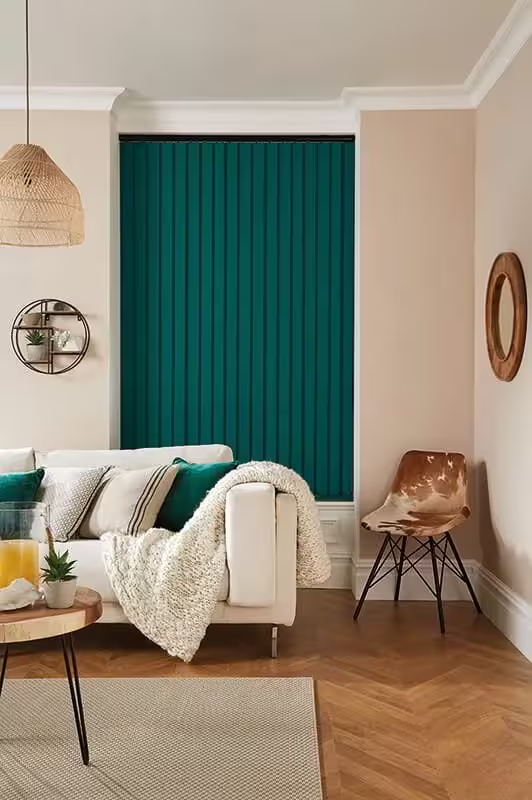
Built for the windows that other blinds can't cover well
Vertical blinds aren't a compromise — they're the correct choice for wide, floor-to-ceiling, and door-adjacent openings where roller, roman, or venetian blinds would bunch, sag, or simply not reach.
Slides open — door stays usable
Vertical vanes stack neatly to one or both sides of the headrail when drawn back. Unlike a roller or roman blind which pulls upward, vertical blinds slide clear of the door opening — so you can use the door without the blind in the way.
Precise light control across the full width
Each vane rotates simultaneously via a chain-linked traverse system — from fully open (view-through) to fully closed (overlapping edges, no light gap). Partial tilting lets you control glare on one side of the room without closing the whole blind.
Covers bay windows without a join
A single vertical blind headrail can span a bay window opening in one continuous run — no need for separate blinds on each facet with gaps between them. The vanes hang straight across the full width, giving a clean, uninterrupted line from one end of the bay to the other.
Wand-operated — no hanging cords
Our vertical blinds use a side wand to tilt the vanes and a separate cord or wand to traverse them across the headrail. The wand keeps the tilt operation cord-free at child height. Safe-break chain connectors are fitted to any cord elements as standard, meeting current UK child safety regulations.
Made to measure for any width
The headrail is cut to your exact window or door width — no standard sizing, no off-cuts. Vane count is calculated from the width so the spacing is balanced across the full opening. Available in 89mm (standard) and 127mm (wide vane) widths to suit different window proportions.
Easy to replace individual vanes
Vanes clip in and out of the carriers individually — if one gets damaged or discoloured, it can be replaced without removing the entire blind. We supply spare vanes at fitting. This repairability is a significant practical advantage over roller blinds, which need full replacement when the fabric is damaged.
The headrail, vanes, and traverse system — explained simply
Vertical blinds hang from a headrail — an aluminium track fixed to the wall or ceiling above your window. Individual vanes clip into rotating carriers spaced evenly along the headrail. The wand rotates all carriers simultaneously to tilt the vanes; a separate cord or wand traverses them across the track to open or close the blind.
Ours are made to the exact width and drop of your window — so the vanes reach the floor or sill without bunching, and the headrail fills the width of the opening without leaving an uncovered gap at either side.
- 89mm standard vane — suits most window and door widths
- 127mm wide vane — fewer vanes, cleaner look on large openings
- Split-draw option — opens from the centre outward
- One-way draw — all vanes stack to one side
- Wand tilt — cord-free at child height as standard
- Safe-break chain connectors on traverse cord
Three vane types — right for different rooms
The vane material affects how much light comes through, how the blind handles moisture, and how easy it is to clean. Choose by room first, then by colour and texture.
Woven fabric vanes in a wide range of textures, weights, and colours — from sheer voile (lets diffused light through while maintaining daytime privacy) to room-darkening fabric (blocks most direct sunlight without full blackout). The right choice for living rooms, bedrooms, and home offices where softness and colour range matter.
Blackout-lined fabric vanes with a foam or aluminium backing that prevents light transmission through the vane face. When fully closed with vane edges overlapping, blackout vertical blinds block direct sunlight effectively — suited to bedrooms, nurseries, and home cinemas where daytime darkness matters. Note: some light bleed at the sides of the headrail is normal with any vertical blind.
Solid PVC vanes are non-porous and completely wipeable — the correct choice for bathrooms, utility rooms, and conservatories where fabric would absorb moisture and develop mould over time. Available in plain white, off-white, and a small range of neutral tones. PVC vanes are also the most durable choice in rooms with pets or heavy daily use.
What our customers say
"We had a large bay window that nothing seemed to cover properly. The vertical blind they fitted spans the whole thing in one run and it looks really neat — no gaps, no bunching. Really pleased with how it's turned out."
"The patio doors were a nightmare before — the old blind kept catching on the door handle. The new one splits in the middle and stacks to both sides, so the door opens and closes without touching the blind at all. Should have done it years ago."
"Measured and fitted within a week of calling. The fitter was friendly, took his time getting the headrail level, and it's hanging perfectly. The blackout ones in our bedroom have made a real difference to how well we sleep."
From quote to fitted — how we work
We handle every step. You don't deal with a separate fitter, a courier, or a manufacturer — just us.
Free home visit
We come to you, measure every window, and talk through fabric and vane options.
Fixed price on the spot
You get a written quote before we leave. No estimates — the price quoted is the price you pay.
Made to your measurements
Headrail cut to width, vane drop cut to length, carriers set to your vane spacing.
Professionally fitted
Our fitters install and level the headrail, hang every vane, and check the traverse before leaving.
Vertical blind questions, answered
Something else on your mind? Ask us when we visit — no obligation, no pressure.
Are vertical blinds still a good choice, or do they look dated?
Vertical blinds fell out of fashion in the 1990s mainly because of poor quality fabric choices — thin, cheap PVC vanes that yellowed quickly. Modern fabric vanes in textured, room-darkening materials look clean and contemporary. For patio doors and large windows, vertical blinds remain the most practical and functional choice — and a well-made one in the right fabric looks entirely at home in a modern room.
What's the difference between 89mm and 127mm vanes?
89mm is the standard vane width — it works well on most window and door widths and gives a conventional vertical blind look. 127mm vanes are wider, resulting in fewer vanes across the same opening and a bolder, more contemporary appearance. Wide vanes suit very large openings (over 3m) where 89mm vanes would produce too many closely-spaced strips. We'll advise at survey which suits your opening better.
Can a vertical blind cover a whole bay window in one run?
Yes — this is one of vertical blinds' key advantages over other blind types. A single headrail can span the full width of a bay window opening, with the vanes hanging straight across all facets. The headrail is fixed to the ceiling or wall above the bay recess. The result is a single clean line of vanes across the full width, with no gaps or joins between bay sections.
Are vertical blinds child-safe?
Yes, with the right specification. Our vertical blinds use a wand to tilt the vanes — no cord at child height for tilting. The traverse cord (which draws the blind open and closed) is fitted with safe-break chain connectors that separate under tension. We can also specify a wand-only traverse on narrower blinds to eliminate the traverse cord entirely. We'll confirm the child-safe options at your survey.
Can I get a split-draw vertical blind for patio doors?
Yes — split-draw is the most common configuration for patio and French doors. The vanes are divided into two groups that stack to opposite sides of the headrail, leaving a clear opening in the centre when drawn back. This means the door can be used without moving the entire blind to one side. Single-draw (all vanes to one side) is also available where wall space only allows stacking in one direction.
How do I clean vertical blinds?
Fabric vanes can be dusted with a dry microfibre cloth or a soft brush — work top to bottom on each vane. For marks, spot-clean with a damp cloth and mild detergent; test on a hidden area first. PVC vanes wipe down with a damp cloth and are the most forgiving to clean. Individual vanes clip out of the carriers if a more thorough clean is needed — re-clip once dry.
How long do made-to-measure vertical blinds last?
A well-made vertical blind typically lasts 8–12 years. The headrail and carriers are the most important components — cheap plastic carriers crack and cause vanes to drop. Ours use quality nylon carriers with stainless steel pivot pins. Individual vanes can be replaced if damaged without changing the whole blind. PVC vanes last longer than fabric under heavy UV exposure or in wet rooms.
How much do made-to-measure vertical blinds cost?
Vertical blind pricing depends on the width of the opening, the drop, and the fabric choice. They're generally among the most cost-effective made-to-measure blind options for large openings — a single vertical blind is typically less expensive than multiple Roman or roller blinds covering the same area. We give a fixed price after a free home visit with no obligation to proceed.
Ready to sort those big windows out?
Book a free home visit and we'll measure up, show you fabric samples, and leave you with a fixed price — no obligation, no follow-up pressure if you decide not to go ahead.
Book a Free Home VisitFree visit · Fabric samples brought to you · Fixed price · No obligation